Device layer
Laptops, Chromebooks, desktops, microcontrollers, kits, sensors, networking, and peripherals chosen by deployment context.
 Discuss a deployment
Lab Stack
The public stack view is designed to explain enough for trust and implementation clarity without exposing internal private configuration.
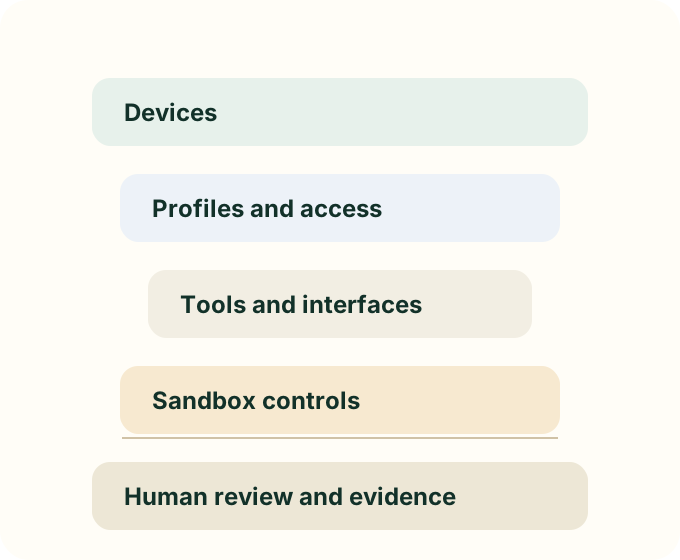
Top to bottom tells you what the user sees. Bottom to top tells you what makes that experience safe and maintainable.
Each layer exists so the next layer has a controlled foundation rather than a hidden assumption.
Laptops, Chromebooks, desktops, microcontrollers, kits, sensors, networking, and peripherals chosen by deployment context.
User profiles, browser separation, account boundaries, and access roles that determine what a learner, teacher, operator, or adult builder can see or change.
Coding environments, robotics tools, browser applications, AI interfaces, and operational utilities introduced only when they suit the route.
Controlled experimentation rules that keep exploratory work away from live production systems or unmanaged data exposure.
Critical transitions are reviewed by a human before sensitive access, public release, or operational reliance is expanded.
The system keeps enough evidence to explain what happened, why the route was chosen, and what was intentionally limited.
Public operating note
Silica Lab is not a fake “everything is unlocked” surface. It is an explanation of the operating environment and a route into the right human conversation.
The public pages explain controls and patterns, not the private implementation details that should remain internal.
Boundaries, review, and evidence are described plainly because trust should be operational, not decorative.
Next step